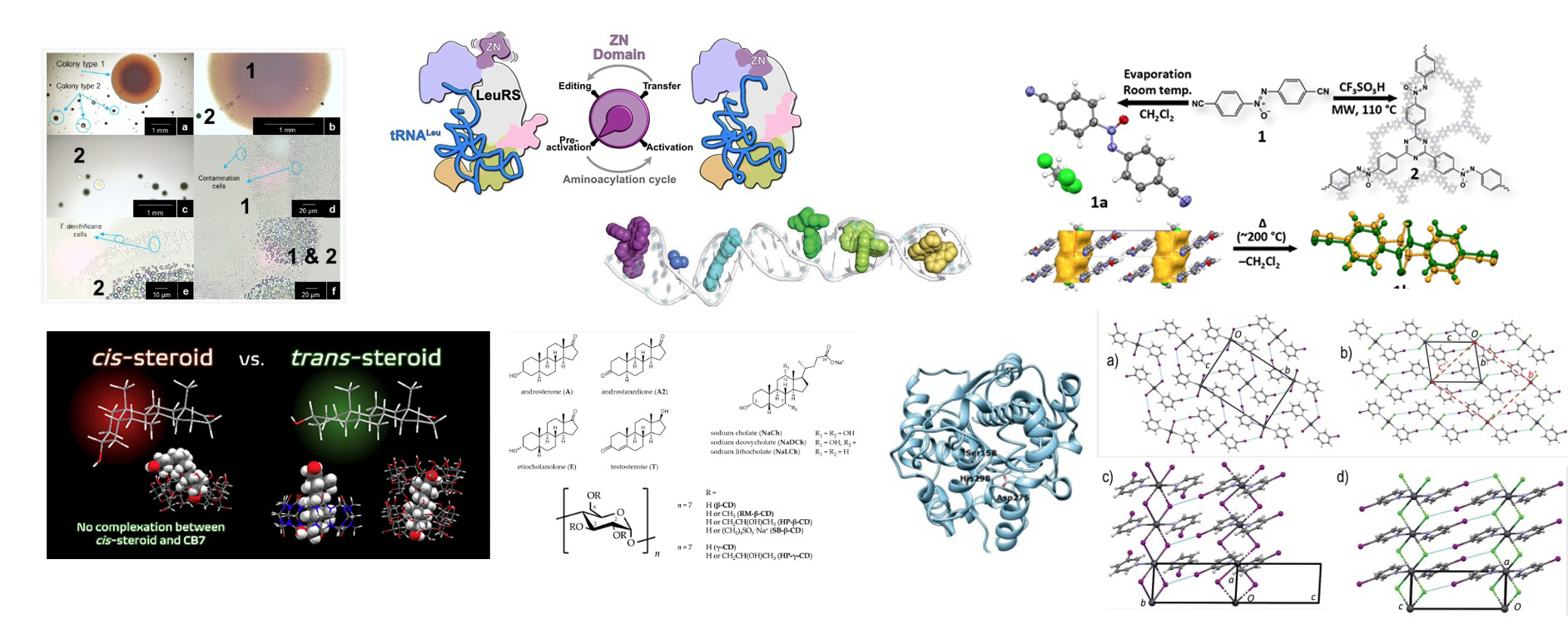
Porous organic materials can be used for selective adsorption of greenhouse gases from the atmosphere. In this study, the influence of trigonal connectors (triphenylamine and triphenilpyridine) and nitrogen–nitrogen linkages (azo, azoxy and azodioxy) on geometrical and adsorption properties of new porous organic polymers was investigated by computational methods based on electrostatic potential values, periodic DFT calculations and GCMC simulations. In addition, a new azo-bridged polymer with a pyridine central unit was successfully synthesized and characterized. The obtained polymer exhibits a relatively large specific surface area of 606 m2 g−1 and the CO2 binding capacity of 32 mg g−1, which is in excellent agreement with the results obtained by GCMC simulation.
The results indicated that the introduction of azoxy and azodioxy linkages increases the binding affinity of CO2 and that the CO2 adsorption of the studied porous organic materials can be tentatively predicted from the calculated electrostatic potential values. The methods described herein for investigation of the structural and adsorption properties of systems with nitrogen-nitrogen linkages could also be applied in the design of other porous organic materials for selective CO2 adsorption.
The research was supported by the Croatian Science Foundation within the project From nitrogen-containing aromatic compounds to new functional organic-based materials (FunMaterials, IP-2020-02-4467).




 Pristupačnost