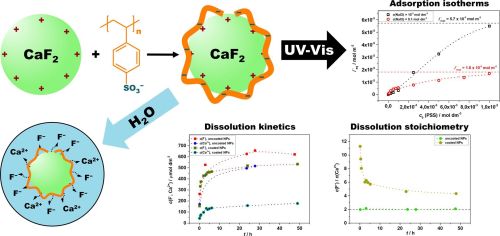
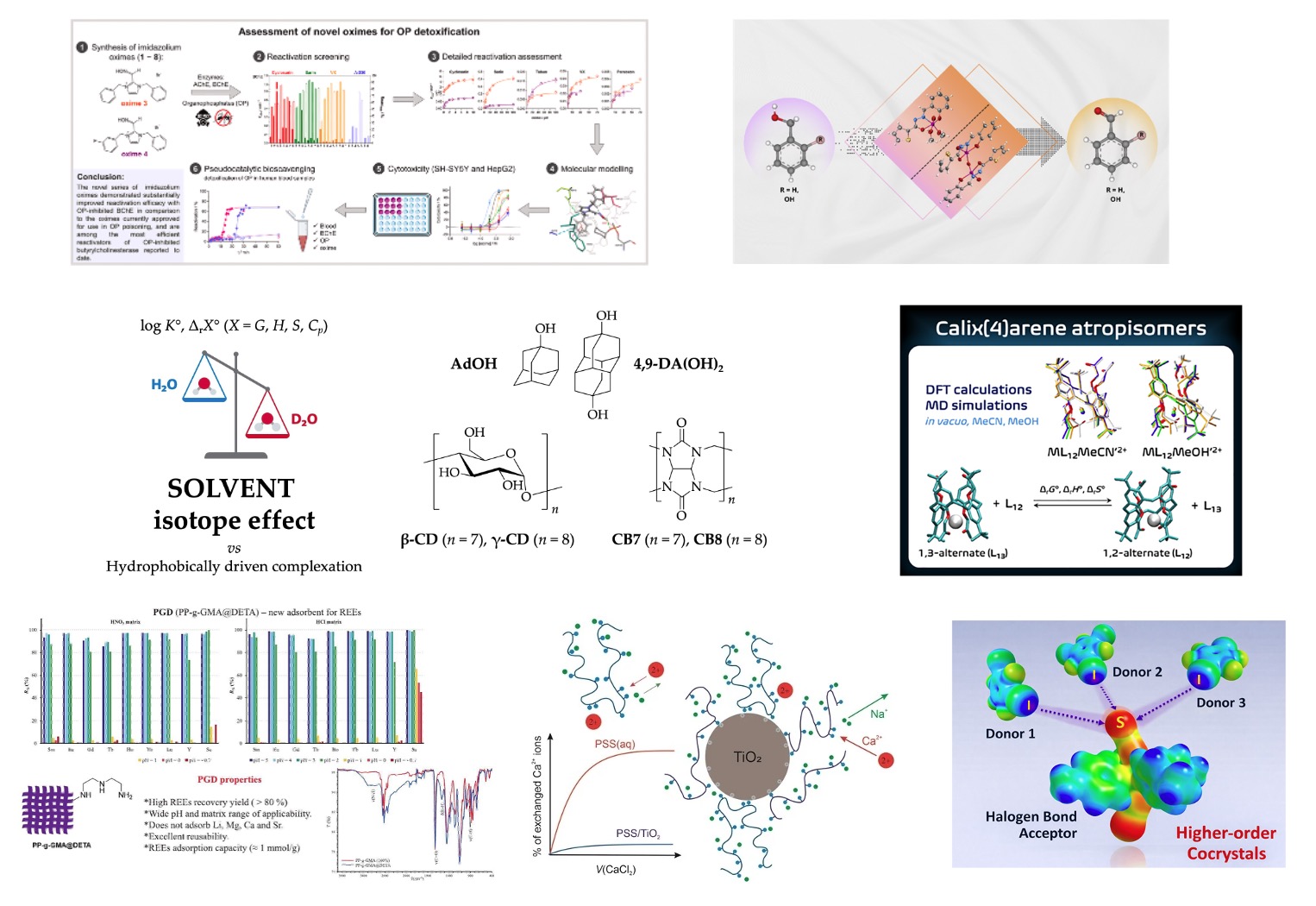
The study examined the adsorption of the polyanion poly(4-styrene sulfonate) (PSS) onto calcium fluoride (fluorite) nanoparticles under various experimental conditions. After determining the optimal adsorption conditions, the dissolution of fluorite nanoparticles with and without the adsorbed polyelectrolyte was monitored using calcium and fluoride ion-selective electrodes at different pH values. The research revealed that the dissolution of uncoated calcium fluoride nanoparticles does not follow the expected stoichiometric dissolution ratio (1:2), indicating a more complex dissolution mechanism. On the other hand, the dissolution rate of nanoparticles coated with PSS was lower than that of uncoated particles, as the adsorbed PSS binds the released calcium ions on the particle surface, thereby influencing the dissolution process. Furthermore, the obtained data allowed for the successful determination of the calcium fluoride dissolution rate and the reaction order with respect to the oxonium cation.
The results of this study are based on Ivor Vavra Plavšić's master's thesis and Filip Margetić's internship during his undergraduate chemistry studies. They represent a step forward in the use of polyelectrolytes as protective coatings in the fluorite industry.



 Pristupačnost